How Does a Worm Farm Work? What's Happening Inside?
Discover how a worm farm works, from kitchen scraps and feeding layers to rich worm castings and liquid drainage. A simple beginner's explanation.
Published 9 November 2026
Have you ever looked inside a worm farm and wondered what's actually happening? How do kitchen scraps turn into rich worm castings, and where does all that liquid at the bottom come from?
Understanding how a worm farm works is easier than you might think. It's a living composting system where compost worms, microorganisms, moisture and organic material work together to break down food waste and produce valuable material for your garden.
The process happens gradually, layer by layer. Food scraps go in at the top, worms and microorganisms break them down, and over time the system produces finished worm castings and drainage liquid.
Let's take a closer look at what's happening inside your worm farm.
1. Understanding How a Worm Farm Works
A worm farm is a simple but remarkably productive living system.
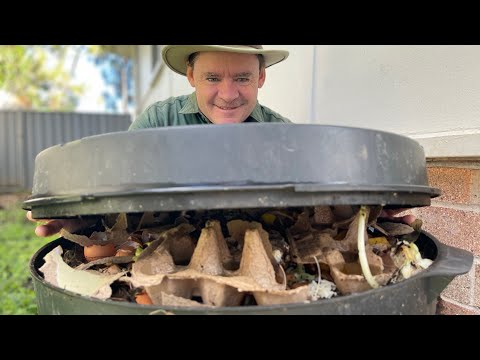
You add suitable organic material, such as fruit and vegetable scraps, to the feeding area. Compost worms move up into this material and feed on the decomposing organic matter and the microorganisms breaking it down.
As the material gets processed, it gradually becomes darker and more refined. Worm castings accumulate throughout the system, while excess moisture can drain down towards the bottom.
A typical tiered worm farm has three main working areas:
- The feeding zone: Where kitchen scraps and other suitable organic materials are added.
- The bedding and processing zone: Where worms live, feed and help transform organic material into castings.
- The bottom collection zone: Where excess liquid can collect and drain from the system.
Each area has a different role, but they all work together to keep the worm farm operating.
2. The Feeding Zone – Where Everything Starts
Right at the top of the system is the feeding zone.
This is where you add your kitchen scraps, including suitable fruit and vegetable waste and other organic materials.
It's also where the worms come up to feed.
One thing worth understanding is that worms aren't simply eating pieces of food in the same way we eat a meal. Microorganisms such as bacteria and fungi help break down the organic material first. The worms consume decomposing organic matter and the microorganisms associated with it.
As the food breaks down, it becomes easier for the worms to process.
This is why a healthy worm farm is more than just a container full of worms. It's an active biological system involving worms, microorganisms, organic material, air and moisture.
What should you put in the feeding zone?
Good starting materials include:
- Fruit scraps.
- Vegetable peelings.
- Banana skins.
- Suitable garden plant material.
- Other appropriate plant-based kitchen waste.
Avoid adding large amounts of food at once. Allow the worms time to process what is already there before adding more.
3. The Bedding Layer – Where the Transformation Happens
Below the feeding area is the bedding and processing zone.
This is where much of the important work takes place.
The bedding provides a comfortable environment for the worms. It holds moisture, allows air to move through the material and provides a place for the worms and microorganisms to live.
As food scraps begin to break down, worms move through the material and process it.
Over time, the original scraps become increasingly transformed into dark, crumbly worm castings.
Why is bedding so important?
Good bedding helps maintain the conditions your worms need.
It should be:
- Moist, but not waterlogged.
- Loose enough to allow air movement.
- Suitable for compost worms to move through.
- A comfortable environment for the worm population.
If the bedding becomes too dry, too wet or poorly aerated, the worm farm can become less productive.
This is why checking moisture and keeping the system in a suitable location are such important parts of worm farm maintenance.
4. Worm Castings – The Finished Product
One of the best things about a healthy worm farm is the worm castings it produces.
Worm castings are the material left after worms have processed organic matter. They are generally dark, fine and crumbly when mature.
What started as kitchen scraps gradually becomes a valuable soil amendment.
Worm castings can be used around the garden to improve soil quality and support healthy plant growth.
They are particularly useful for gardeners who want to recycle household organic waste and return useful organic material to their soil.
How do castings move through the worm farm?
In a tiered worm farm, the worms feed in the upper areas while processed material gradually accumulates and settles through the system.
The exact movement depends on the design of the worm farm and how it is managed.
As the material matures, you can harvest the finished castings according to the instructions for your particular model.
It's a simple way to turn everyday kitchen waste into something useful for your garden.
5. The Liquid Collection Zone at the Bottom
At the bottom of many tiered worm farms is a collection area where excess moisture drains.
This liquid comes from moisture moving through the bedding and decomposing organic material.
It may carry dissolved organic substances and nutrients with it.
Some people refer to this collected liquid as worm tea, but it's important to understand the difference.
Is the liquid at the bottom really worm tea?
Not necessarily.
Liquid that drains naturally through a worm farm is more accurately called leachate or worm farm drainage liquid.
It is different from a deliberately prepared worm casting extract, which is made by mixing finished castings with water under controlled conditions.
The quality of drainage liquid can vary depending on what has been added to the farm and how the system is managed.
Don't automatically assume that liquid collected at the bottom is a finished fertiliser or safe to apply directly to plants.
The important thing is to manage moisture properly and avoid allowing excess liquid to accumulate inside the farm.
6. Keeping Worms Safe from the Liquid
There's another important detail inside a tiered worm farm.
Sometimes worms can make their way down towards the bottom collection area.
If they become trapped in standing liquid, they can be at risk.
One useful feature in some worm farm designs is a raised area, cone or moulded ramp at the base.
This gives worms something to climb onto and helps them make their way back up into the main bedding and feeding areas.
If your worm farm doesn't have this feature, you may be able to use a suitable raised object, such as a brick or another stable support, depending on the design.
Make sure anything you add is safe, stable and doesn't block drainage.
The worm farm shown in the video has this feature built into its mould, allowing worms to climb back up towards the safer working areas.
It's a small design detail, but it's worth checking when choosing or maintaining a worm farm.
7. How All the Layers Work Together
Now that we've looked at each part individually, it's easier to understand the complete process.
Here's what happens inside a typical tiered worm farm:
Step 1 – Add organic material
Kitchen scraps and other suitable organic materials are placed in the feeding zone at the top.
Step 2 – Microorganisms begin breaking down the food
Bacteria and other microorganisms help decompose the food, making it easier for the worms to process.
Step 3 – Worms feed and process the material
Compost worms move through the bedding and feed on the decomposing organic material and microorganisms.
Step 4 – Worm castings accumulate
As the worms process the material, castings are produced and accumulate throughout the system.
Step 5 – Excess moisture drains downwards
Some moisture moves through the bedding and collects in the bottom drainage area.
Step 6 – You harvest the useful products
Over time, you can harvest mature worm castings and manage the collected drainage liquid appropriately.
And that's the beauty of a worm farm. What begins as everyday kitchen waste becomes a useful part of your garden's organic growing system.
8. Frequently Asked Questions About How Worm Farms Work
What actually happens inside a worm farm?
Compost worms and microorganisms work together to break down organic material. The worms process decomposing food and microorganisms, producing worm castings while excess moisture can drain towards the bottom.
What are the three layers of a worm farm?
A typical tiered worm farm has a feeding zone, a bedding and processing zone, and a bottom collection area. The exact arrangement depends on the model.
Do worms eat the kitchen scraps?
Worms feed on decomposing organic material and the microorganisms associated with it. Bacteria and fungi help break down food before and during the process.
What are worm castings?
Worm castings are the material produced after worms process organic matter. They are a valuable organic soil amendment that can be used in the garden.
What is the liquid at the bottom of a worm farm?
It is generally excess moisture that has drained through the system. It is more accurately described as leachate or drainage liquid rather than automatically being called finished worm tea.
Can worms drown in the bottom of a worm farm?
Worms can become trapped in standing liquid if the bottom collection area becomes flooded. Good drainage and a suitable raised climbing area can help reduce this risk.
Why does my worm farm have a liquid collection tray?
The collection area catches excess moisture that drains through the bedding. It also makes it easier to monitor and manage drainage.
How long does it take for a worm farm to produce castings?
This depends on the number of worms, the amount and type of food, temperature, moisture and the design of the farm. Give the system time to establish rather than expecting finished castings immediately.
Final Thoughts: A Simple System Doing an Amazing Job
A worm farm might look like a simple stack of trays from the outside, but there's a lot happening inside.
Kitchen scraps enter at the top, microorganisms help break them down, worms process the material, and valuable castings gradually build up throughout the system.
At the bottom, excess moisture drains away and needs to be managed properly.
Once you understand how the different areas work together, looking after your worm farm becomes much easier.
And that's the real beauty of compost worms. With the right conditions, these little workers turn everyday organic waste into something your garden can benefit from.
Related Tutorials
Explore more practical tutorials on Discover Worm Composting:
Keep reading

Beginner Worm Farming
How to Start a Worm Farm with Coco Peat – Step-by-Step for Beginners
Beginner Worm Farming
How to Keep a Worm Farm Healthy – Practical Tips That Work

Beginner Worm Farming
How to Start a Worm Farm – The Simple Way to Get Started

Vegetable Gardening