How to Make Money Composting – Turn Garden Waste into a Sellable Product
Discover how to turn green waste, wood chips and coffee grounds into a finished compost product you can sell. Marty shares his practical backyard composting business system.
Published 9 November 2026
One of the interesting things about composting is that it doesn't have to stop at making good soil for your own garden. With the right materials, a bit of space and a workable system, you can turn organic waste into a finished compost product that may provide an additional source of income.
In this practical look at Marty's Garden, Marty shows how he combines green waste, wood chips, leaves, bark and large quantities of coffee grounds to produce compost. He also explains how worms move through the system, improve the material and help create a finished product that can be screened and bagged.
The important idea is that you're not simply making a compost heap and hoping for the best. You're developing a repeatable process: collect suitable materials, build and manage the compost, introduce worm activity as it cools, screen the finished material and prepare it for sale.
How the composting system works
Marty's system begins with a mixture of organic materials, mainly:
- Wood chips and small pieces of wood.
- Leaves and bark.
- Other suitable green waste.
- Coffee grounds, which provide a nitrogen-rich addition to the mix.
Marty explains that he receives approximately 30–40 litres of coffee grounds a day. This is a substantial amount of material, and it helps keep the composting process active.
The pile is turned and managed as the material breaks down. As it becomes more processed, it is moved through the system and eventually becomes suitable for the worms to work through.
The key is to create a system that keeps processing material rather than relying on one pile that is started and forgotten.
The worms help improve the finished compost
One of the most useful parts of Marty's approach is the way he uses worms throughout the composting process.
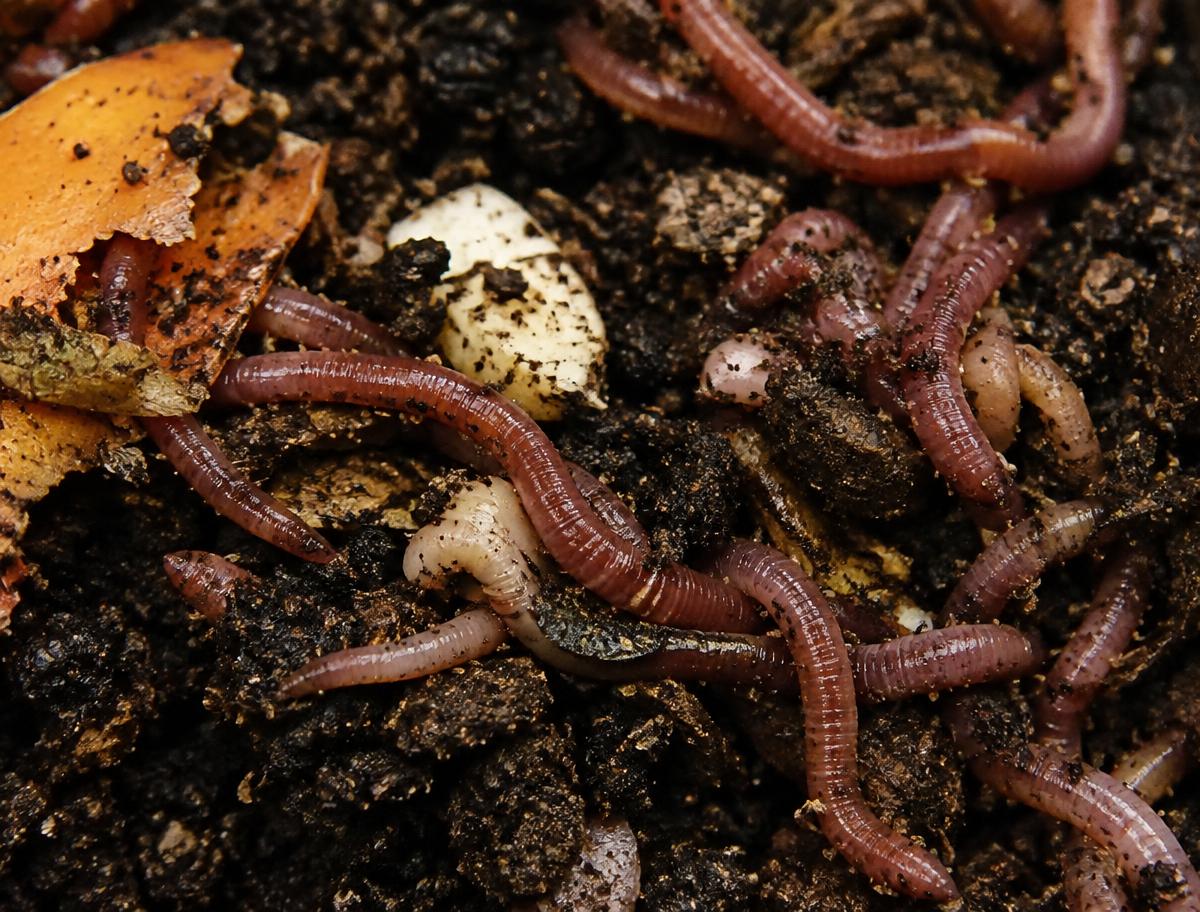
As the compost cools and becomes suitable for them, worms move into the material. They feed, move through the compost and leave their castings behind.
Marty also uses large worm farm barrels alongside the composting windrows. These hold worm populations and allow worms to move in and out of the compost as conditions change.
This movement helps distribute worm activity and biology through the material.
Marty's aim is to let the compost cool and then give the worms time to work through it. He describes allowing them to process the material for a couple of weeks before taking it out for screening.
He estimates that the finished material can contain around 10–20% worm castings. This is his experience with his particular system, rather than a guaranteed percentage for every compost operation.
Why letting the compost cool matters
You cannot expect worms to thrive in freshly active, hot compost.
The composting process can generate considerable heat. The material needs to cool sufficiently before worms can safely move through it.
Marty allows the worms to work through the cooling compost for a couple of weeks. This gives them time to process the material and add their castings.
Moisture is important too. Marty explains how recent rain has helped wet his compost, making it easier for the material to blend and break down.
When conditions become too dry, worms can move deeper into the system. When moisture improves, they can move back up into the compost.
The practical lesson is to monitor your compost rather than follow a rigid calendar. Temperature, moisture, material condition and worm activity all influence when a batch is ready for the next stage.
Screening and preparing the compost for sale
Once the compost has been processed and the worms have had time to work through it, Marty moves the material to a sifter.
The process is straightforward:
- Take the processed compost from the pile.
- Feed it through the sifter.
- Separate the finer finished material from larger pieces.
- Return suitable unfinished material to the composting system.
- Collect the screened compost for bagging.
The aim is to produce a consistent, fine material that looks and feels like a finished product.
Marty explains that reducing the amount of larger material passing through into the finished bucket means less material has to be sent back through the process. This improves the efficiency of each screening run.
His homemade sifter cost approximately $200–$250 to build and has processed many bags of compost. He mentions that he may eventually build an improved stainless-steel version.
It is a good example of starting with practical equipment rather than investing in expensive machinery before you know how well the system works.
How much money can a composting business make?
Marty shares an interesting estimate from his own operation.
He describes the system as producing around a 70% return before accounting for his own time. As an example, he explains that it might cost approximately $30 to make $100 worth of product.
That is an illustration of his experience, not a guaranteed profit margin or a promise that another backyard composting operation will achieve the same result.
Your actual costs will depend on several things:
- Whether you have to pay for incoming organic materials.
- Whether coffee grounds and green waste are available locally.
- The cost of transport and handling.
- Water, electricity and equipment expenses.
- Bags, labels and packaging.
- How much material is lost during processing.
- The time required to turn, move, screen and bag the compost.
- Whether you need to pay someone to help with the work.
The distinction between material costs and labour is especially important. A system can look profitable when labour is excluded, but your time still has value.
Before selling compost, work out your own cost per bag or unit of finished product. Include packaging, transport, equipment wear and labour so you understand what you are actually earning.
Can you run a compost business from your backyard?
Marty makes an interesting point about location. If you have room around the side of your house or at the back of your property, a small composting operation may be possible.
However, space is only one consideration.
Before starting, think about:
- Whether your neighbours are comfortable with the activity.
- Local council rules and requirements.
- Access for collecting and moving materials.
- Drainage and managing excess water.
- Odours, pests and suitable material handling.
- Safe storage and movement of finished compost.
- Any requirements that apply to selling compost or soil products in your area.
A good system needs to be manageable, clean and considerate of the surrounding properties.
Start with a scale you can control. You can learn a great deal from a small operation before investing in larger equipment or taking on more material.
The advantage of building a continuous composting system
One of the most useful lessons from Marty's approach is that the compost pile, worm farms and sifter are all part of one connected process.
The compost is built from suitable organic materials. As it breaks down, it is turned and moved through the system. Worms then work through the cooler material, adding castings and helping develop the finished compost.
The sifter separates the finished product from larger pieces, which can be returned to the process where appropriate.
This creates a cycle rather than a one-off batch.
It also gives you several opportunities to improve the operation over time. You can adjust the materials, moisture, turning routine, worm populations and screening process as you learn what works best.
Is a small composting business worth considering?
If you enjoy gardening, working with organic materials and building productive systems, composting can be an interesting small business to explore.
The important thing is to start with the practical side. Find out what materials are available, understand how much compost you can produce, establish a reliable process and work out the true cost of your finished product.
Marty's example shows that you don't necessarily need expensive commercial machinery to get started. His homemade sifter and connected backyard worm composting system demonstrate how a practical backyard operation can develop over time.
As Marty puts it, he enjoys the process, and the result is a product that can go back into the vegetable garden while also creating a potential income stream.
That's the appeal of this approach: you're recycling organic materials, producing something useful and building a system that can grow with experience.
Frequently asked questions
Can you make money selling homemade compost?
Yes, it may be possible to earn income by producing and selling compost. Your results depend on material costs, production volume, equipment, packaging, labour and whether there is demand for your finished product.
What materials can be used to make compost for sale?
Suitable materials can include wood chips, leaves, bark, green waste and coffee grounds. The materials need to be properly balanced and processed to produce a stable, usable compost.
Can worms be added to a compost pile?
Worms can work through compost once it has cooled sufficiently and conditions are suitable. They help process organic material and leave worm castings behind. They should not be added to a hot, actively heating pile.
How long should worms work through compost?
In Marty's system, he allows the compost to cool and gives the worms approximately a couple of weeks to work through it before screening. The actual time depends on temperature, moisture, materials and worm activity.
Do you need expensive equipment to start a compost business?
Not necessarily. Marty demonstrates a homemade sifter that cost approximately $200–$250 to build. The equipment you need will depend on the size of your operation and how much compost you intend to process.
How profitable is a backyard composting business?
Profitability varies. Marty estimates that his material costs can be around $30 for every $100 of finished product value, excluding his own time. Other operations may have very different costs and selling prices.
Final thoughts
A composting business doesn't have to begin with a large commercial site or expensive machinery. It can begin with suitable organic materials, a manageable composting area, a good understanding of the process and a practical way to screen the finished product.
Marty's system is a great example of combining composting and worm farming to create something useful for gardens and potentially valuable to customers.
Happy composting and happy gardening!
Keep reading
Backyard Systems
Building a Backyard Worm Composting System That Works Together

Beginner Worm Farming
How to Start a Worm Farm with Coco Peat – Step-by-Step for Beginners

Vegetable Gardening
Building Soil with Worm Farms and No-Dig Gardening – A Simple Backyard System

Videos