Oats vs Rice for Worm Farms – Which Food Is Better for Your Worms?
Discover why Marty uses rice to establish worm farms and cooked oats for longer-lasting feeding. Learn how different foods support microbes and worm breeding.
Published 9 November 2026
When it comes to feeding compost worms, not all foods behave the same way. Some break down quickly and get microbial activity moving, while others provide a slower, longer-lasting food source.
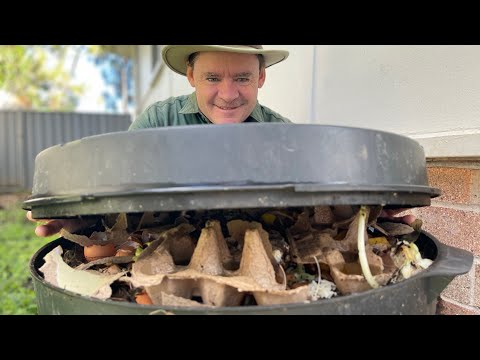
In this video, Marty from Marty's Garden explains why he has been experimenting with cooked oats instead of relying so heavily on rice in his worm farms. After around 15 years of worm farming, he has learned that different foods can play different roles in establishing a healthy worm farm, encouraging feeding activity and supporting worm breeding.
The interesting thing is that rice and oats don't necessarily need to compete with each other. Used thoughtfully, they may work together as part of a varied feeding approach.
Why Marty started experimenting with oats
Marty has used rice as a high-energy food source in his worm farms, particularly when establishing a new system.
Rice breaks down relatively quickly and helps stimulate microbial activity. This is useful when you're trying to get a new worm farm going and encourage the living biological activity that helps worms feed.
However, rice can disappear very quickly.
Marty wanted to experiment with another food that would provide a longer-lasting supply of nutrients and microbes rather than breaking down as quickly.
His alternative was cooked oats.
He already cooks oats for his own breakfast, so he has a convenient source of leftovers that can be put to use in the worm farm.
In the video, he shows cooked oats with a small amount of honey mixed through. This is his own feeding experiment, rather than a requirement for feeding worms.
What happens when you feed cooked oats to worms?
One of the interesting things Marty notices is how the worms gather around the oats.
When he lifts the material, he can see worms moving up from underneath and feeding around the food source.
The worms don't necessarily all appear on the surface at once. Some move up to feed, while others retreat into the darker bedding when exposed to light.
This is a good reminder that there is a lot happening below the surface of a worm farm that you won't see just by lifting the lid.
Marty describes the cooked oats as a slower food source than rice. They remain in the system longer and provide a sustained supply of food as the material breaks down.
The oats also encourage microbial activity, which is important because compost worms feed on the microorganisms and decomposing organic material associated with their food.
Rice vs oats – what's the difference?
Both rice and oats can be useful additions to a worm farm, but Marty explains that they behave differently.
Rice – a quick microbial boost
Rice is particularly useful when establishing a new worm farm.
Marty explains that its starch content and relatively low fibre content help it break down quickly and stimulate microbial activity.
That gives the worms an accessible food source sooner and helps get the biological activity moving through the system.
For someone starting a new worm farm, this quick start can be useful.
However, because rice breaks down quickly, it doesn't necessarily provide the same extended feeding period as oats.
Cooked oats – a slower, sustained food source
Cooked oats behave differently.
They break down more slowly and can remain available for longer.
Marty describes oats as a slower-burning food source that provides a more sustained supply of nutrients and microbial activity.
He is also interested in their protein content and how this may support the development and breeding of his worm population.
His experience has led him to experiment with oats as a way of keeping food available for longer.
Can you use rice and oats together?
Marty suggests that alternating between rice and oats, or even combining them, could be worth experimenting with.
You could use rice to help stimulate early microbial activity and then use oats as another food source that remains available for longer.
This is an interesting approach to try in your own worm farm.
Start with small amounts and observe how quickly the worms and microbes process the food. Every worm farm is different, so your feeding quantities should depend on the size and activity of your colony.
The importance of microbes in a worm farm
A healthy worm farm is much more than a container full of worms.
It is a living environment containing microorganisms, decomposing organic material, bedding and worms all working together.
When food is added, microbes begin breaking it down. Worms feed on the microorganisms and the decomposing material, helping move nutrients and biological activity through the farm.
This is why food that encourages microbial activity can be useful.
Rice is one option for stimulating activity relatively quickly. Oats offer another option with a slower breakdown.
The goal is not to keep adding more and more food. It is to provide suitable food in amounts that the worm farm can process without becoming overloaded.
Don't forget the bedding
Marty also shows the sugarcane bedding used in his experimental worm farm.
Underneath the cardboard and newspaper covering, the sugarcane provides a fibrous carbon-rich material that gradually breaks down.
Other materials Marty mentions include:
- Pea straw.
- Suitable animal bedding.
- Straw and other fibrous plant materials.
- Cardboard and newspaper.
- Compost incorporated into bedding.
These materials help create a suitable environment for worms while providing organic matter that gradually breaks down.
Marty also explains that he has improved the bedding by adding some compost after previously experiencing worms escaping.
The bedding needs to remain suitable for the worms, with appropriate moisture, darkness and conditions.
If you experiment with animal bedding or straw, check what it contains and avoid introducing contaminated material or excessive weed seeds.
Why protein and worm breeding matter
One of the reasons Marty is interested in oats is their nutritional value.
He discusses how he wants to encourage the mature worms in his system to breed and produce cocoons.
Compost worms are hermaphrodites, meaning each mature worm has both male and female reproductive organs. Two mature worms can exchange sperm and subsequently produce cocoons.
Those cocoons can contain developing baby worms.
Marty mentions that a cocoon may contain several young worms and that encouraging breeding is part of his plan to increase his worm population.
A growing worm population can eventually allow you to establish additional worm farms, expand your wormery or stock underground worm farms in the garden.
Food is one part of that process, but suitable bedding, moisture, temperature and general worm-farm conditions are just as important.
Watch what happens inside your worm farm
One of the most valuable lessons from Marty's experiment is to look beyond what you see on the surface.
When he checks the oats, he notices worms gathering around the feeding area. But when he digs through other parts of the bedding, he finds worms distributed throughout the system as well.
He also notices how temperature affects their movement.
During hotter conditions, the worms retreat deeper into the bedding. When the temperature is more comfortable, they move back towards the feeding area.
This is why it is important not to leave worms exposed to bright light for too long when inspecting a farm.
Check the bedding, look at how much food remains, observe the worm activity and make adjustments based on what you find.
How much rice or oats should you feed?
There is no single amount that works for every worm farm.
A small new worm farm needs much less food than a large, established colony.
The most important rule is to start small.
- Add a small amount of cooked rice or oats.
- Place it in a suitable feeding area.
- Keep it covered with bedding or a worm blanket.
- Check how much has been consumed before adding more.
- Reduce feeding if food is accumulating or becoming unpleasant.
Cooked foods can become soggy and break down quickly, especially in warm conditions. Avoid large amounts that may ferment, heat up or create unpleasant conditions.
Do not treat oats or rice as a complete replacement for suitable bedding and a varied diet.
The aim is to keep the worm farm balanced, not to overwhelm it with high-energy foods.
Building a larger worm farm system
Marty's longer-term plan is to keep expanding his wormery.
He talks about developing different types of worm farms, including:
- Sugarcane bedding worm farms.
- Coco peat worm farms.
- Animal bedding worm farms.
- Larger systems that can produce more worms for other farms.
He wants to build each system, experiment with different bedding and feeding methods, and then return to show how the worms are developing.
This is a useful way to learn about worm farming because it allows you to compare different systems and see what works over time.
Once your worm population grows, you can use some of those worms to establish additional farms or introduce them into underground worm farms in the garden.
Using your worm farm to grow more food
The benefits of a productive worm farm don't stop at producing more worms.
Worm castings and suitable worm-farm materials can be used to improve garden soil and support healthy plant growth.
Marty talks about using the products from his worm farms throughout his garden, including around seedlings and vegetable plants.
This creates a useful backyard cycle:
- Feed the worm farm with suitable organic materials.
- Maintain healthy bedding and moisture.
- Encourage worm activity and breeding.
- Harvest suitable castings and other finished materials.
- Return those materials to the garden.
- Grow more food and continue the cycle.
It is a practical way to turn everyday organic waste into something valuable for your garden.
Frequently asked questions
Are oats good for worm farms?
Yes, cooked oats can be used as a supplementary food source for compost worms. They break down more slowly than rice and can provide a longer-lasting food source. Start with small amounts and observe how your worms respond.
Is rice or oats better for compost worms?
They have different uses. Marty finds rice useful when establishing a new worm farm because it breaks down quickly and stimulates microbial activity. He uses cooked oats as a slower, more sustained food source. Both can be useful in a balanced feeding approach.
Can you feed worms cooked porridge oats?
Yes, plain cooked oats can be offered in small quantities. Allow them to cool before adding them to the worm farm. Avoid adding large amounts, and monitor how quickly the worms process them.
Does honey help worms?
Marty shows leftover cooked oats containing a small amount of honey. Honey is not necessary for feeding compost worms, and large amounts of sugary food are best avoided because they can ferment and create problems in a worm farm.
Do oats help worms breed?
Marty is experimenting with oats because of their nutritional value and his interest in supporting worm growth and breeding. However, successful breeding also depends on mature worms, suitable moisture, temperature, bedding and general farm conditions.
Can you use rice and oats together in a worm farm?
You can experiment with using both, either separately or in small combined amounts. Start cautiously and monitor how quickly the food is being processed.
Why do worms disappear when you open the worm farm?
Worms prefer dark, moist environments. When exposed to light, they naturally move back down into their bedding. Temperature can also influence where they gather inside the farm.
Final thoughts
Marty's experiment with oats is a great reminder that worm farming is something you can keep learning about and improving.
Rice can be useful for getting microbial activity started quickly, while cooked oats offer a slower food source that can remain in the worm farm for longer.
Rather than assuming one food is always better than another, try small amounts, watch how your worms respond and learn what works in your own system.
After 15 years of worm farming, Marty is still experimenting, building new farms and sharing what he discovers.
And that's what makes worm farming so interesting. There's always something happening beneath the surface!
Happy worm farming, worm nerds!
Keep reading

Beginner Worm Farming
How to Start a Worm Farm with Coco Peat – Step-by-Step for Beginners

Vegetable Gardening
Building Soil with Worm Farms and No-Dig Gardening – A Simple Backyard System

Backyard Systems
How to Make Money Composting – Turn Garden Waste into a Sellable Product
Beginner Worm Farming